Gospel Pentecost Ascension
Thursday, May 28, 2009

J M Pandey Financial Management
27th. session. San Juan
Author: P Antonio Rivero LC
I. INTRODUCTION
The Gospel of John is different from the rest of the Gospels. His vision of Jesus, their mysterious language, the focus of the work: everything makes him a unique Gospel. It has been said of him that is a gospel spiritual, and it certainly is. But while the Gospel is more emphasis on the Incarnation of Jesus and in the human details of his life. Embodiment of divinity and thus appear as two sides of the same mystery. II. DOCTRINAL OBJECTIVE: get into the Gospel of John.
III. LIVING OBJECTIVE: Assimilate the message that this Gospel has to offer.
IV. THESIS:
The Gospel of John is a response to the situation in their community and contains a deep reflection about the mystery of Jesus. Those who are with him and accept it, are gradually discovering the depth of this mystery, through faith. And those who reject, for lack of faith, end in the dark and blindness of sin. All signs and wonders are designed to discover a facet of the unfathomable riches of Jesus. And the speeches that follow miracles have a theological character, that is, reflect on Jesus and his mission. To John he is painted with an eagle, the eagle is the bird that gets more height, like the Gospel of John, who rose to the secrets of the Divine.
V. EXPLANATION OF THE THESIS:
Christians who were directed by Juan lived a difficult and complex situation: b)
Externally, there was rejection and persecution. His pursuers are the Jews that appear on every page of his Gospel and expelled from the synagogue to the Christian community. Therefore, these Christians lived in fear, some were afraid to appear as disciples, others had left the community. And the main temptation to those still in the world was shut away in the upper room, retreat to the circle in which they were protected.
Therefore, this community has rallied around the "beloved disciple" John.
 2. Literary characteristics
 is a gospel very different from the other three. It has its own sources, so write 'his' gospel based on their memories and with a different purpose. Selected some miracles and deepened in its symbolic meaning, depending on what I wanted to teach the Christian community.
speeches is rich and has a way of talking deep, reflective, abstract at times. John seems a theologian. So his language is adult faith. Talk with the new concepts used in the Hellenistic culture: light-dark, life, love, logos ... and adapts to the Christian faith. Part of realities: water, bread, birth, life, light ... but then transforms and transports us to other realities than through the
The Gospel is presented separately in two major sections, preceded by a prologue and followed by an epilogue:
a)
Prologue and testimonies (1, 1-51): anticipates large themes of the gospel, the Word, Life, Light, Truth, the world, the darkness ... and with it, the first evidence, presented to John as the last great prophet who points to Jesus as the Messiah.
b)
The Book of Signs
(2-12): narrated seven miracles and signs. What matters is not the miracle itself, but to reveal Jesus as He came again, as New Man, as light, as living water, such as Easter, etc.
c)
The book of the Passion and Easter (13-20). It has two sections: the farewell speech (13-17) and the passion and glory (18-21).
d) Epilogue
(21, 1-25): Meets various appearances of Jesus, in which the beloved disciple has an important place with Peter.
4. Content theological and spiritual
End of the Gospel of John: John wants to prove that Jesus is true God. Hence, his specialty being the theological discourses. Key:
The Gospel of John is a response to the situation in their community. A controversy over the divinity and humanity of Jesus, the evangelist responds deepening the mystery of his incarnation and death. And the temptation to flee the world, encourages pupils to consolidate their faith in Jesus, and united to him, leaving the world to bear witness to the truth. Before Jesus must decide: either to accept Jesus or rejects it. Those who meet Jesus and accept it will gradually discover the depth of this mystery: he is recognized as Lord, Prophet, Messiah and Savior of the world, and above all, as the Son of God. And those who do not agree, still in darkness, the blindness of their heart.
The more a Christian makes his decision for Jesus, for His Life, His truth, His righteousness ... so much more will face opposition from some who will make life impossible, to take his life.
Content:
a)
is called the spiritual Gospel
the mature Christian: long speeches meditative, preparation of items (bread of life, water, spirit and truth ...). These speeches are not so much words of Jesus but
speeches about Jesus
. Presents Jesus as the Word, Life, Light, Bread of Life, The Way, Truth, Life, Resurrection ...
b)
is the Gospel of signs: These signs are intended to awaken faith. He wants to prove that those signs or sacraments are an extension of those saving acts of Jesus. These are the signs:
water-baptism.
breads: the Eucharist.
water and blood from the side: baptism and the Eucharist.
blindness: the man who has found Christ-Light.
The hostility of the enemies of Jesus: the man who will not accept Jesus.
c)
is the Gospel of life and love
: all converge on Jesus' moral commandment of fraternal love. d)
is the Gospel of Jesus
hour: the hour of final victory, his glorification through free and voluntary surrender to the cross. It is time dear Jesus, as the supreme act of love. The Cross becomes the glorious throne from which Jesus founded the Church. And Mary is Mother of the Church made up fresh from the side of Christ. The intimacy established between the mother and the beloved disciple symbolize the relations that should exist between the Church and their children. e)
is the Gospel of the Father
: the life of Jesus by John as an out of the Father, stay true to the mission the Father entrusted to her, and return to the Father to be glorified and sat on his right.
The theme of Christ-Life is truly the heart of the Gospel of John, all other issues are related to this: "I I am the light ... living water ... the bread of life. "
CONCLUSION:
The Gospel of John is, in fact, a doctrinal letter as gospel. His first intention is not to narrate, but to teach. The main interest of this work is of a theological miracles are there signs, the speeches, more speeches of Jesus are speeches about Jesus. Such speeches are not about the problems of the time of Jesus (the law, the Sabbath, pure or impure food, etc ...) but on the mission of Jesus in the world: to be the Messiah, sent by the Father, Light world, living water, bread of heaven.
PRAYER:
Lord, if You are the Word, tell us. If you are the Light, enlighten us. If you are Life, vivifícanos. If you are the truth, teach. If You are the Way, lead us to the Father. If you are the Resurrection, resucítanos. If you are the living bread, feed us. If You are the Living Water, sácianos. If you are the Shepherd, guide us with your pastures of salvation. If You are the New Man, men make us new to us. If you are the New Wine, intoxicate. Amen. QUESTIONNAIRE 1. How has San Juan Jesus? 2. Unlike the other Gospels, John's What gives greater importance: the preaching of Jesus through the parables, or the speeches in which Jesus proclaims its identity, its mission and its relationship with the Father?
Author: P Antonio Rivero LC
I. INTRODUCTION
The Gospel of John is different from the rest of the Gospels. His vision of Jesus, their mysterious language, the focus of the work: everything makes him a unique Gospel. It has been said of him that is a gospel spiritual, and it certainly is. But while the Gospel is more emphasis on the Incarnation of Jesus and in the human details of his life. Embodiment of divinity and thus appear as two sides of the same mystery. II. DOCTRINAL OBJECTIVE: get into the Gospel of John.
III. LIVING OBJECTIVE: Assimilate the message that this Gospel has to offer.
IV. THESIS:
The Gospel of John is a response to the situation in their community and contains a deep reflection about the mystery of Jesus. Those who are with him and accept it, are gradually discovering the depth of this mystery, through faith. And those who reject, for lack of faith, end in the dark and blindness of sin. All signs and wonders are designed to discover a facet of the unfathomable riches of Jesus. And the speeches that follow miracles have a theological character, that is, reflect on Jesus and his mission. To John he is painted with an eagle, the eagle is the bird that gets more height, like the Gospel of John, who rose to the secrets of the Divine.
V. EXPLANATION OF THE THESIS:
- 1. Author, date and target
- The author is John the beloved disciple of Jesus. His mother, Salome is the group of women who followed Jesus to serve and is present at Calvary. John is always shown on the list after Pedro and three intimate of Jesus.
Christians who were directed by Juan lived a difficult and complex situation: b)
Externally, there was rejection and persecution. His pursuers are the Jews that appear on every page of his Gospel and expelled from the synagogue to the Christian community. Therefore, these Christians lived in fear, some were afraid to appear as disciples, others had left the community. And the main temptation to those still in the world was shut away in the upper room, retreat to the circle in which they were protected.
Therefore, this community has rallied around the "beloved disciple" John.
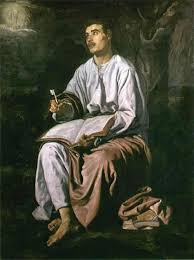 is a gospel very different from the other three. It has its own sources, so write 'his' gospel based on their memories and with a different purpose. Selected some miracles and deepened in its symbolic meaning, depending on what I wanted to teach the Christian community.
speeches is rich and has a way of talking deep, reflective, abstract at times. John seems a theologian. So his language is adult faith. Talk with the new concepts used in the Hellenistic culture: light-dark, life, love, logos ... and adapts to the Christian faith. Part of realities: water, bread, birth, life, light ... but then transforms and transports us to other realities than through the
symbol. John uses much dialogue Nicodemus Jesus, Samaritan, Jesus, Jews, Jesus, born blind, Jesus, etc. to present their teaching in a more lively and participatory. Another
John is the following: presenting sign or miracle, and then makes the discourse on the sign.
3. Division and thematic content
John is the following: presenting sign or miracle, and then makes the discourse on the sign.
3. Division and thematic content
The Gospel is presented separately in two major sections, preceded by a prologue and followed by an epilogue:
a)
Prologue and testimonies (1, 1-51): anticipates large themes of the gospel, the Word, Life, Light, Truth, the world, the darkness ... and with it, the first evidence, presented to John as the last great prophet who points to Jesus as the Messiah.
b)
The Book of Signs
(2-12): narrated seven miracles and signs. What matters is not the miracle itself, but to reveal Jesus as He came again, as New Man, as light, as living water, such as Easter, etc.
c)
The book of the Passion and Easter (13-20). It has two sections: the farewell speech (13-17) and the passion and glory (18-21).
d) Epilogue
(21, 1-25): Meets various appearances of Jesus, in which the beloved disciple has an important place with Peter.
4. Content theological and spiritual
End of the Gospel of John: John wants to prove that Jesus is true God. Hence, his specialty being the theological discourses. Key:
The Gospel of John is a response to the situation in their community. A controversy over the divinity and humanity of Jesus, the evangelist responds deepening the mystery of his incarnation and death. And the temptation to flee the world, encourages pupils to consolidate their faith in Jesus, and united to him, leaving the world to bear witness to the truth. Before Jesus must decide: either to accept Jesus or rejects it. Those who meet Jesus and accept it will gradually discover the depth of this mystery: he is recognized as Lord, Prophet, Messiah and Savior of the world, and above all, as the Son of God. And those who do not agree, still in darkness, the blindness of their heart.
The more a Christian makes his decision for Jesus, for His Life, His truth, His righteousness ... so much more will face opposition from some who will make life impossible, to take his life.
Content:
a)
is called the spiritual Gospel
the mature Christian: long speeches meditative, preparation of items (bread of life, water, spirit and truth ...). These speeches are not so much words of Jesus but
speeches about Jesus
. Presents Jesus as the Word, Life, Light, Bread of Life, The Way, Truth, Life, Resurrection ...
b)
is the Gospel of signs: These signs are intended to awaken faith. He wants to prove that those signs or sacraments are an extension of those saving acts of Jesus. These are the signs:
water-baptism.
breads: the Eucharist.
water and blood from the side: baptism and the Eucharist.
blindness: the man who has found Christ-Light.
The hostility of the enemies of Jesus: the man who will not accept Jesus.
c)
is the Gospel of life and love
: all converge on Jesus' moral commandment of fraternal love. d)
is the Gospel of Jesus
hour: the hour of final victory, his glorification through free and voluntary surrender to the cross. It is time dear Jesus, as the supreme act of love. The Cross becomes the glorious throne from which Jesus founded the Church. And Mary is Mother of the Church made up fresh from the side of Christ. The intimacy established between the mother and the beloved disciple symbolize the relations that should exist between the Church and their children. e)
is the Gospel of the Father
: the life of Jesus by John as an out of the Father, stay true to the mission the Father entrusted to her, and return to the Father to be glorified and sat on his right.
The theme of Christ-Life is truly the heart of the Gospel of John, all other issues are related to this: "I I am the light ... living water ... the bread of life. "
CONCLUSION:
The Gospel of John is, in fact, a doctrinal letter as gospel. His first intention is not to narrate, but to teach. The main interest of this work is of a theological miracles are there signs, the speeches, more speeches of Jesus are speeches about Jesus. Such speeches are not about the problems of the time of Jesus (the law, the Sabbath, pure or impure food, etc ...) but on the mission of Jesus in the world: to be the Messiah, sent by the Father, Light world, living water, bread of heaven.
PRAYER:
Lord, if You are the Word, tell us. If you are the Light, enlighten us. If you are Life, vivifícanos. If you are the truth, teach. If You are the Way, lead us to the Father. If you are the Resurrection, resucítanos. If you are the living bread, feed us. If You are the Living Water, sácianos. If you are the Shepherd, guide us with your pastures of salvation. If You are the New Man, men make us new to us. If you are the New Wine, intoxicate. Amen. QUESTIONNAIRE 1. How has San Juan Jesus? 2. Unlike the other Gospels, John's What gives greater importance: the preaching of Jesus through the parables, or the speeches in which Jesus proclaims its identity, its mission and its relationship with the Father?
Free Sample Business Project Report
28a. session. The Acts of the Apostles
Author: P Antonio Rivero LC
II. DOCTRINAL OBJECTIVE: know the essentials of this book. a) He used
several sources: the Gospel of Mark, the famous "Q Source", "files" oral and written several communities, living memories of the apostles, memories personal information about Paul. Reworked this material and gave his writing a unified form.
b)
has been written taste and reflects an ability comparable to that of other writings of the Hellenistic era.  c) narrative accounts are

an intention issue, that is, cause in the reader's desire to live these same experiences.
d)
The speeches
inserted along the stories focus on the essential: the death and resurrection of Jesus Christ as the source of salvation for all men.
e)
There are also summaries are brief summaries of community life that mark the transitions and give the reader pause for reflection to stop and understand the meaning of what is told in the book.
f)
Until the invention of printing, the book of Acts was passed, as the rest of the New Testament manuscripts.
3. Division and thematic content
a) Introduction
(1, 1-11), which links the gospel with the book of Acts of the Apostles. b) The Church of Jerusalem
(1, 12-8.3): the apostolic community and the community of Jerusalem.
c)
The expansion of the Church in Asia Minor
(8, 4-14.28) in Samaria, conversion of Paul, Peter in Caesarea, outside Palestine (Antioch), release of Peter, Paul's first missionary journey Cyprus and Asia Minor.
d)
Assembly in Jerusalem (15, 1-35). e) Expansion
the Greek world (15, 36-21, 14): Paul's second trip in Greece and third journeys of Paul in Asia Minor. f) From Jerusalem to Rome
(21, 15-28, 29): Paul in Jerusalem and Caesarea to Rome.
4. Theological and spiritual content
End of book: describe the life of the early church and how Christianity arose from within the Jewish and became a universal religion, not without difficulty, tears and controversy, especially when we got into a first community that the pagans, ie non-Jews, either Greek or Roman.
Key: Lucas chooses the historical material that interests you most for their theological purposes, that is, for its spiritual message. Content:
a)
The foundation of the Christian community is the
Kerygma, that is, the announcement of the Easter event, which is summarized as follows: Jesus suffered, died and rose again to save.
The person of Jesus is supported by the testimony of eyewitnesses. This was the plan of God, and it was announced by the prophets. Jesus
calls faith, acceptance of its message and change of heart. b)
The Holy Spirit, the protagonist: more than Peter and Paul, the Holy Spirit is the protagonist in all decisions of the Church. The Holy Spirit is the one who made the apostles to "witnesses" and intrepid missionaries of Jesus at Pentecost. The Holy Spirit is the force that launches the early Church. This Spirit is the Spirit of Jesus, which is perpetuated in the Church.
c) The Christian community: an ideal. What characteristics of this early Christian community? 107
Announce teaching of the apostles or kerygma, accompanied by miracles.
live in fraternal communion and charity.
feed on prayer and the breaking of bread and Eucharist.
distribute their goods to the needy.
d)
Features Church
missionary and universal Church, is projected under the impulse of the Spirit, out of Jerusalem and Palestine. It is a church on mission, so that every person has the opportunity to receive the gospel. Admission to the Christian community makes them free men of any religion or cult of other gods and even the whole religious institution. The conflicts that arose at the beginning with the opening of the community to all the men were solved through dialogue, prayer, fellowship and help of the Spirit.
ministerial Church:
each one is chosen according to God's call and personal qualities: deacons, missionaries, responsible community.
Apostolic Church:
any service or ministry has at its center and point of reference to the apostles. Therefore, the seven deacons are presented to the apostles, they lay their hands, the decisions of the Council of Jerusalem are endorsed and initialed by Peter and James, Paul goes to Jerusalem several times to confront their faith and preaching by Peter. The apostles are guarantors of truth and unity. With the growth of communities, the apostles chose some responsibilities as mission support in the community, monitor the transmission of the message, teach, make decisions at key moments, distribution functions in the community, providing the sacraments there were two : baptism and the breaking of bread.
tried and persecuted Church
: from Home is a persecuted Church, but is brave, confident in the strength of the Spirit. Persecuted by the Jews themselves observant of the Mosaic Law, because the apostles admitted to the pagans, exempting them from circumcision and the Mosaic law, was enough for only faith in Jesus Christ. And persecuted by the pagan Romans, who saw the standard of living of the first Christians a strong attack and call attention to the life of luxury, vanity and unbridled pleasures worn by pagans.
V. CONCLUSION:
The Acts of the Apostles presents the model of Christian life, ie how to live there find us twenty-first century Christians of all ages, united in the love of Christ, together with our pastors (Pope, bishops and priests) who obey and those who work side by side in the construction of the Church of Christ
1 and fed in the sacraments, especially the Eucharist. VI. PRAYER: Holy Spirit, as you drove, the first church, we ask you to guide our steps in this third millennium of Christianity, and put on our lips and in our hearts the message of Jesus, for transmission to same courage, clarity and enthusiasm of the early Christians. Amen. _________________________
So says the book of Acts of the Apostles: "They devoted the teaching of the apostles and the fellowship, to the breaking of bread and to prayer" (2, 42).
Each with the role God wants lay people, bringing light and leaven of Christ to all human fields where their work and sanctification, the religious, witnessing their commitment to Christ and foreshadowing and from here goods from heaven and hierarchy, with its sacred service and ministry, sacraments and direction of souls.
QUESTIONNAIRE 1. A Christian of today can live with the same fervor and dedication to their Christian faith as did the early Christians? What are we missing?
2. What is the main character in the Acts of the Apostles?
Author: P Antonio Rivero LC
- III. LIVING OBJECTIVE: Back to the fervor of the early Christian community.
-
IV. THESIS: The Acts of the Apostles is a continuation of the Gospel of Luke and narrating the birth of Christianity and the early church. Here we find the roots of a message and a way of life that has been decisive in the history of mankind. The Church presented in the Acts is the community of disciples, led by the Holy Spirit. Testify to the Lord from the experience of brotherhood.
- The date is probably after the Gospel, written around the year 80. Therefore, the Acts of the Apostles was written around the year 1985-1990. The Message of Acts is addressed to the Church that have been off the first impetus and has begun to appear the negligence and apathy, a Church born of Paul's mission, called to carry the message of Jesus all Roman Empire.
several sources: the Gospel of Mark, the famous "Q Source", "files" oral and written several communities, living memories of the apostles, memories personal information about Paul. Reworked this material and gave his writing a unified form.
b)
has been written
c) an intention issue, that is, cause in the reader's desire to live these same experiences.
d)
The speeches
inserted along the stories focus on the essential: the death and resurrection of Jesus Christ as the source of salvation for all men.
e)
There are also summaries are brief summaries of community life that mark the transitions and give the reader pause for reflection to stop and understand the meaning of what is told in the book.
f)
Until the invention of printing, the book of Acts was passed, as the rest of the New Testament manuscripts.
3. Division and thematic content
a) Introduction
(1, 1-11), which links the gospel with the book of Acts of the Apostles. b) The Church of Jerusalem
(1, 12-8.3): the apostolic community and the community of Jerusalem.
c)
The expansion of the Church in Asia Minor
(8, 4-14.28) in Samaria, conversion of Paul, Peter in Caesarea, outside Palestine (Antioch), release of Peter, Paul's first missionary journey Cyprus and Asia Minor.
d)
Assembly in Jerusalem (15, 1-35). e) Expansion
the Greek world (15, 36-21, 14): Paul's second trip in Greece and third journeys of Paul in Asia Minor. f) From Jerusalem to Rome
(21, 15-28, 29): Paul in Jerusalem and Caesarea to Rome.
4. Theological and spiritual content
End of book: describe the life of the early church and how Christianity arose from within the Jewish and became a universal religion, not without difficulty, tears and controversy, especially when we got into a first community that the pagans, ie non-Jews, either Greek or Roman.
Key: Lucas chooses the historical material that interests you most for their theological purposes, that is, for its spiritual message. Content:
a)
The foundation of the Christian community is the
Kerygma, that is, the announcement of the Easter event, which is summarized as follows: Jesus suffered, died and rose again to save.
The person of Jesus is supported by the testimony of eyewitnesses. This was the plan of God, and it was announced by the prophets. Jesus
calls faith, acceptance of its message and change of heart. b)
The Holy Spirit, the protagonist: more than Peter and Paul, the Holy Spirit is the protagonist in all decisions of the Church. The Holy Spirit is the one who made the apostles to "witnesses" and intrepid missionaries of Jesus at Pentecost. The Holy Spirit is the force that launches the early Church. This Spirit is the Spirit of Jesus, which is perpetuated in the Church.
c) The Christian community: an ideal. What characteristics of this early Christian community? 107
Announce teaching of the apostles or kerygma, accompanied by miracles.
live in fraternal communion and charity.
feed on prayer and the breaking of bread and Eucharist.
distribute their goods to the needy.
d)
Features Church
missionary and universal Church, is projected under the impulse of the Spirit, out of Jerusalem and Palestine. It is a church on mission, so that every person has the opportunity to receive the gospel. Admission to the Christian community makes them free men of any religion or cult of other gods and even the whole religious institution. The conflicts that arose at the beginning with the opening of the community to all the men were solved through dialogue, prayer, fellowship and help of the Spirit.
ministerial Church:
each one is chosen according to God's call and personal qualities: deacons, missionaries, responsible community.
any service or ministry has at its center and point of reference to the apostles. Therefore, the seven deacons are presented to the apostles, they lay their hands, the decisions of the Council of Jerusalem are endorsed and initialed by Peter and James, Paul goes to Jerusalem several times to confront their faith and preaching by Peter. The apostles are guarantors of truth and unity. With the growth of communities, the apostles chose some responsibilities as mission support in the community, monitor the transmission of the message, teach, make decisions at key moments, distribution functions in the community, providing the sacraments there were two : baptism and the breaking of bread.
: from Home is a persecuted Church, but is brave, confident in the strength of the Spirit. Persecuted by the Jews themselves observant of the Mosaic Law, because the apostles admitted to the pagans, exempting them from circumcision and the Mosaic law, was enough for only faith in Jesus Christ. And persecuted by the pagan Romans, who saw the standard of living of the first Christians a strong attack and call attention to the life of luxury, vanity and unbridled pleasures worn by pagans.
V. CONCLUSION:
The Acts of the Apostles presents the model of Christian life, ie how to live there find us twenty-first century Christians of all ages, united in the love of Christ, together with our pastors (Pope, bishops and priests) who obey and those who work side by side in the construction of the Church of Christ
1 and fed in the sacraments, especially the Eucharist. VI. PRAYER: Holy Spirit, as you drove, the first church, we ask you to guide our steps in this third millennium of Christianity, and put on our lips and in our hearts the message of Jesus, for transmission to same courage, clarity and enthusiasm of the early Christians. Amen. _________________________
QUESTIONNAIRE 1. A Christian of today can live with the same fervor and dedication to their Christian faith as did the early Christians? What are we missing?
How To Make Dirt Out Of Icing
29th. session. The person of St. Paul
Author: P Antonio Rivero LC Church is open to all men: the Church "Catholic." For the Church were to do this "catholic" and not a sect within Judaism, God used especially of the Apostle Paul. He understood that the Gospel of Jesus Christ was the Good News to all men and drew the consequences, exceeding the narrow barriers aimed at limiting the preaching of the Gospel enclosing it within a religious exclusivism was only given the people of Israel.
meet one of the most important figures of the missionary expansion of Christianity and doctrinal exhibitor.
IV. EXPLANATION OF THE THESIS:
The first
by Cyprus and southern Asia Minor (years 45-48).
 The second the central part of Asia Minor, Macedonia and Greece (years 49-52).

The third for Galatia, Phrygia, Ephesus, Macedonia and Greece (years 53-58).
A fourth voyage
from Caesarea to Rome by sea, made Paul a prisoner of the Romans.
2. Points of his doctrine
a)
Justified by Faith: as a Pharisee, Paul believed to be justified or saved by detailed practice of law. I thought they were "his" works that made him righteous before God. Now discover that only Christ with his death, it just man, a free. It is not, therefore, "worthy" of salvation but "receive" Christ faithfully adhering
109.
b)
Grace of God:
Paul has experienced the gratuitous love of God. He has discovered that God loves us not because we are good, but to be good. This is the source of joy and security to Paul.
c)
Jesus Christ crucified:
the cross, illuminated by the resurrection is at the heart of Paul. At the foot of the Crucified, Paul feels a sinner, but forgiven. Paul's Jesus is always the Crucified Christ (letter to the Philippians).
d)
The Church, the Body of Christ: Paul perceives the connection between Jesus and his disciples, between the head and body (letter to the Corinthians) and becomes a living member of this body
e) Apostle of Jesus Christ: from the encounter with Jesus, Paul was absolutely in love with Christ and will launch the ministry with passion, without respite or harm. Preaches to the Jews first, then being rejected by them, preach to the Gentiles or pagans.
3. Problems and Paul had difficulties faced
a)
One problem:
A Jewish-Christian church or a new church? That is, who entered the nascent Church, what had to be circumcised and keep the whole law of Moses ... or open to a new reality, a new style? For this first council met in Jerusalem with Peter at their head and the other apostles and decided by the light of the Holy Spirit was not necessary to be circumcised. b) Challenges:
misunderstandings and false accusations everywhere and from his own Jewish brothers and the pagan Greeks and Romans. Jail, where he wrote several letters. Martyrdom in Rome, beheaded, about the year 67, during Nero's persecution.
4. Features of the Pauline communities
a) communities are settled in the Hellenistic world.
This offered many advantages, it was the religious world, but also brought the threat of a hedonistic paganism, attractive and easy to religious cults, customs conflict with the gospel. Now understand the continual warnings, recommendations and Paul calls attention to those communities. b) Most of them were locked in the coastal regions of the northern Mediterranean
(Asia Minor, Greece, Italy), within, both the Roman Empire. Both Paul and his colleagues sought to establish Christian communities hubs in cities linked by a strong communications network. Thus favoring the contact and dialogue among Christian communities. c) are established in urban communities
in contrast with rural communities palestinenses. Paul is certainly not the founder of Christianity, but Christianity is the creator of urban with all that this event would mean for the evolution of Christianity.
d) Among the cities where they settle, the natural area is home communities. home communities are coming together in homes to celebrate their faith and nurture it.
e) are communities made up of Christians of both Jewish and pagan origin. This led, initially, their difficulties, but were overcome with Christian love.
f) are communities where, with the enthusiasm and heroism, is this sin. were not holy communities, but communities that wanted to be holy, with strengths and weaknesses, with wonderful examples and sins. But this is the Church of Christ, holy and sinful at the same time holy and in need of constant conversion.
5. Characteristics of his letters
a)
In what language are written:
Paul's letters are written in Greek "common" language that, in addition to Aramaic, easily dominates. Paul, in general, dictated to a scribe or clerk. Some cards, like writing to Philemon was written by his own hand. But He always sort through and put the final salutations to the letter.
b) End of his letters:
Paul served his letters to communicate his theological and spiritual mystery of Christ. Today, Pope Paul also follows this tradition of sending letters of a theological and spiritual support to all the faithful of the world.
c) How many and what :
are 14, including the Letter to the Hebrews. Paul's own are considered: the first to the Thessalonians, two to the Corinthians, the Galatians and the Romans, that of the Philippians and Philemon. Of the others, though not the same Paul, Pauline clearly written in circles, that is, by disciples of Paul (Colossians, Ephesians, 1-2 Timothy, Titus and 2 Thessalonians), written after Paul's death. Have divided and his letters
kerygmatic Letters:
1 and 2 Thessalonians (year 50-51). Great
letters: Romans, 1 and 2 Corinthians, Galatians (56-58).
captivity Letters: Philippians, Colossians, Ephesians and Philemon (61-63).
Pastoral Letters: 1 and 2 Timothy, Titus (67), with this nickname because of his pastoral concern to establish hierarchy and community organization.
d)
Scheme: Paul's letters are in accordance with the scheme of the ancient letter: heading, the body of the letter or message and the final salute. However, in developing this scheme, Paul is almost always deeply original. The newness of the Gospel through all and, from start to finish, Paul's letters exude Christian life. None of artifice or empty formula.
e)
Style:
Use all stylistic devices: paradox, metaphor, rant and especially the antithesis. Also used exhortations and advice. f)
Material used:
includes material already formulated: hymns 110
, confessions of faith 111
, catalogs of virtues and vices 112
, linked series of texts 113 biblical
, 114 doxologies
. Not only the formula but the reformulated and submitted to a literary-theological transformation.
g) theological Features: From the theological point of view the letters of St. Paul have these Features:
A theological pluralism in his letters, that is, talking about various topics.
No looking in the Pauline letters a systematic theology for two reasons: first, because the historical moment it was in Christian reflection made it possible, and second, because the epistolary genre was not the most appropriate for this . So Paul's theology is a theology in process, specifically as it responds to specific questions.
not built on nothing but fall back on traditions that were running around.
is made His training as Jewish, the abundant use of quotations from the Old Testament. Use the typological interpretation, ie, the ratio-comparison between the events of the Old Covenant and the new.
V. CONCLUSION: After the third trip, was arrested and taken to Rome, where no doubt his release by the year 63, although since then the last four years of his life are in the dark. Apparently he went to Spain (Rom 15, 24 and 28) and made another trip to the East. He died in Rome, beheaded by the executioner of Nero, AD 67, on the same day of the martyrdom of St. Peter. Its buried in the basilica of St. Paul in Rome. PRAYER: Lord, give me the same passion for you and for the salvation of souls that had St. Paul, I also wear and wear me, to see everyone you know and love you and follow you . Amen. __________________________ This teaching developed in the letters to the Romans and Galatians. cf. Phil 2: 6-11, Col 1, 15-20
cf. Rom 1, 2-4, 1 Cor 15: 3-4
See Gal 5, 19-23, 1 Cor 6, 9-10
cf. Rom
3, 10-18
2. Why is it said that the present Church through the Pope and bishops, San Pablo has imitated in form preaching?
Author: P Antonio Rivero LC Church is open to all men: the Church "Catholic." For the Church were to do this "catholic" and not a sect within Judaism, God used especially of the Apostle Paul. He understood that the Gospel of Jesus Christ was the Good News to all men and drew the consequences, exceeding the narrow barriers aimed at limiting the preaching of the Gospel enclosing it within a religious exclusivism was only given the people of Israel.
- Throughout its history the Church has always been illuminated by the words of Saint Paul, for both the Magisterium and theologians necessarily have used their cards to further and propose the doctrine of the faith. Many theological controversies have developed in their texts throne and great saints have nurtured their spirituality in the reading of the Pauline letters. Understanding, then, this titan of Christianity, so that through him, get to know Jesus Christ and the passion to preach with the same courage that Paul himself.
meet one of the most important figures of the missionary expansion of Christianity and doctrinal exhibitor.
- II. OBJECTIVE LIVING: Living what St. Paul tells us: "Be my imitators, as I am of Christ "(1 Cor 11, 1).
-
III. THESIS: San Pablo is one of the most fascinating figures of the New Testament and early Christian character of that we have more historical data. His letters are the most famous match of all time. They are also chronologically, the earliest New Testament writings and therefore we provide the first data on the origin, structure and development of a number of Christian communities to twenty or twenty years from the start of Christianity. His apostolic activity was the main objective of the foundation of Christian communities and thus extend the Church of Christ and the message of salvation brought by Christ.
IV. EXPLANATION OF THE THESIS:
- 1. Your
- born in Tarsus of Cilicia, to the year 10. Jewish race and religion, but of Greek and Roman citizen. His basic training was Jewish. He studied in Jerusalem and in the school of Gamaliel, the old man. At first it was a total rejection of believers in Jesus and launched a fierce persecution, as passionate Pharisee, believing that Christians were a sect against the law of Moses. But one point of his life, circa 36 AD, had a mysterious encounter with Jesus of Nazareth, the road to Damascus, and became a propagandist of the Message of Jesus.
The first
by Cyprus and southern Asia Minor (years 45-48).
The second The third for Galatia, Phrygia, Ephesus, Macedonia and Greece (years 53-58).
A fourth voyage
from Caesarea to Rome by sea, made Paul a prisoner of the Romans.
2. Points of his doctrine
a)
Justified by Faith: as a Pharisee, Paul believed to be justified or saved by detailed practice of law. I thought they were "his" works that made him righteous before God. Now discover that only Christ with his death, it just man, a free. It is not, therefore, "worthy" of salvation but "receive" Christ faithfully adhering
109.
b)
Grace of God:
Paul has experienced the gratuitous love of God. He has discovered that God loves us not because we are good, but to be good. This is the source of joy and security to Paul.
c)
Jesus Christ crucified:
the cross, illuminated by the resurrection is at the heart of Paul. At the foot of the Crucified, Paul feels a sinner, but forgiven. Paul's Jesus is always the Crucified Christ (letter to the Philippians).
d)
The Church, the Body of Christ:
3. Problems and Paul had difficulties faced
a)
One problem:
A Jewish-Christian church or a new church? That is, who entered the nascent Church, what had to be circumcised and keep the whole law of Moses ... or open to a new reality, a new style? For this first council met in Jerusalem with Peter at their head and the other apostles and decided by the light of the Holy Spirit was not necessary to be circumcised. b) Challenges:
misunderstandings and false accusations everywhere and from his own Jewish brothers and the pagan Greeks and Romans. Jail, where he wrote several letters. Martyrdom in Rome, beheaded, about the year 67, during Nero's persecution.
4. Features of the Pauline communities
a) communities are settled in the Hellenistic world.
This offered many advantages, it was the religious world, but also brought the threat of a hedonistic paganism, attractive and easy to religious cults, customs conflict with the gospel. Now understand the continual warnings, recommendations and Paul calls attention to those communities. b) Most of them were locked in the coastal regions of the northern Mediterranean
(Asia Minor, Greece, Italy), within, both the Roman Empire. Both Paul and his colleagues sought to establish Christian communities hubs in cities linked by a strong communications network. Thus favoring the contact and dialogue among Christian communities. c) are established in urban communities
in contrast with rural communities palestinenses. Paul is certainly not the founder of Christianity, but Christianity is the creator of urban with all that this event would mean for the evolution of Christianity.
d) Among the cities where they settle, the natural area is home communities. home communities are coming together in homes to celebrate their faith and nurture it.
e) are communities made up of Christians of both Jewish and pagan origin. This led, initially, their difficulties, but were overcome with Christian love.
f) are communities where, with the enthusiasm and heroism, is this sin. were not holy communities, but communities that wanted to be holy, with strengths and weaknesses, with wonderful examples and sins. But this is the Church of Christ, holy and sinful at the same time holy and in need of constant conversion.
5. Characteristics of his letters
In what language are written:
Paul's letters are written in Greek "common" language that, in addition to Aramaic, easily dominates. Paul, in general, dictated to a scribe or clerk. Some cards, like writing to Philemon was written by his own hand. But He always sort through and put the final salutations to the letter.
b) End of his letters:
Paul served his letters to communicate his theological and spiritual mystery of Christ. Today, Pope Paul also follows this tradition of sending letters of a theological and spiritual support to all the faithful of the world.
c) How many and what :
are 14, including the Letter to the Hebrews. Paul's own are considered: the first to the Thessalonians, two to the Corinthians, the Galatians and the Romans, that of the Philippians and Philemon. Of the others, though not the same Paul, Pauline clearly written in circles, that is, by disciples of Paul (Colossians, Ephesians, 1-2 Timothy, Titus and 2 Thessalonians), written after Paul's death. Have divided and his letters
kerygmatic Letters:
1 and 2 Thessalonians (year 50-51). Great
letters: Romans, 1 and 2 Corinthians, Galatians (56-58).
captivity Letters: Philippians, Colossians, Ephesians and Philemon (61-63).
Pastoral Letters: 1 and 2 Timothy, Titus (67), with this nickname because of his pastoral concern to establish hierarchy and community organization.
d)
Scheme: Paul's letters are in accordance with the scheme of the ancient letter: heading, the body of the letter or message and the final salute. However, in developing this scheme, Paul is almost always deeply original. The newness of the Gospel through all and, from start to finish, Paul's letters exude Christian life. None of artifice or empty formula.
e)
Style:
Use all stylistic devices: paradox, metaphor, rant and especially the antithesis. Also used exhortations and advice. f)
Material used:
includes material already formulated: hymns 110
, confessions of faith 111
, catalogs of virtues and vices 112
A theological pluralism in his letters, that is, talking about various topics.
No looking in the Pauline letters a systematic theology for two reasons: first, because the historical moment it was in Christian reflection made it possible, and second, because the epistolary genre was not the most appropriate for this . So Paul's theology is a theology in process, specifically as it responds to specific questions.
not built on nothing but fall back on traditions that were running around.
is made His training as Jewish, the abundant use of quotations from the Old Testament. Use the typological interpretation, ie, the ratio-comparison between the events of the Old Covenant and the new.
V. CONCLUSION: After the third trip, was arrested and taken to Rome, where no doubt his release by the year 63, although since then the last four years of his life are in the dark. Apparently he went to Spain (Rom 15, 24 and 28) and made another trip to the East. He died in Rome, beheaded by the executioner of Nero, AD 67, on the same day of the martyrdom of St. Peter. Its buried in the basilica of St. Paul in Rome. PRAYER: Lord, give me the same passion for you and for the salvation of souls that had St. Paul, I also wear and wear me, to see everyone you know and love you and follow you . Amen. __________________________ This teaching developed in the letters to the Romans and Galatians. cf. Phil 2: 6-11, Col 1, 15-20
cf. Rom 1, 2-4, 1 Cor 15: 3-4
See Gal 5, 19-23, 1 Cor 6, 9-10
cf. Rom
3, 10-18
2. Why is it said that the present Church through the Pope and bishops, San Pablo has imitated in form preaching?
Subscribe to:
Posts (Atom)